Fillet or whole fish: which to order, and what changes
Buyers often treat whole fish and fillet as the same order at two prices. They are different products with different logistics, and the choice usually decides itself once you know where the work is going to happen.
What each one is
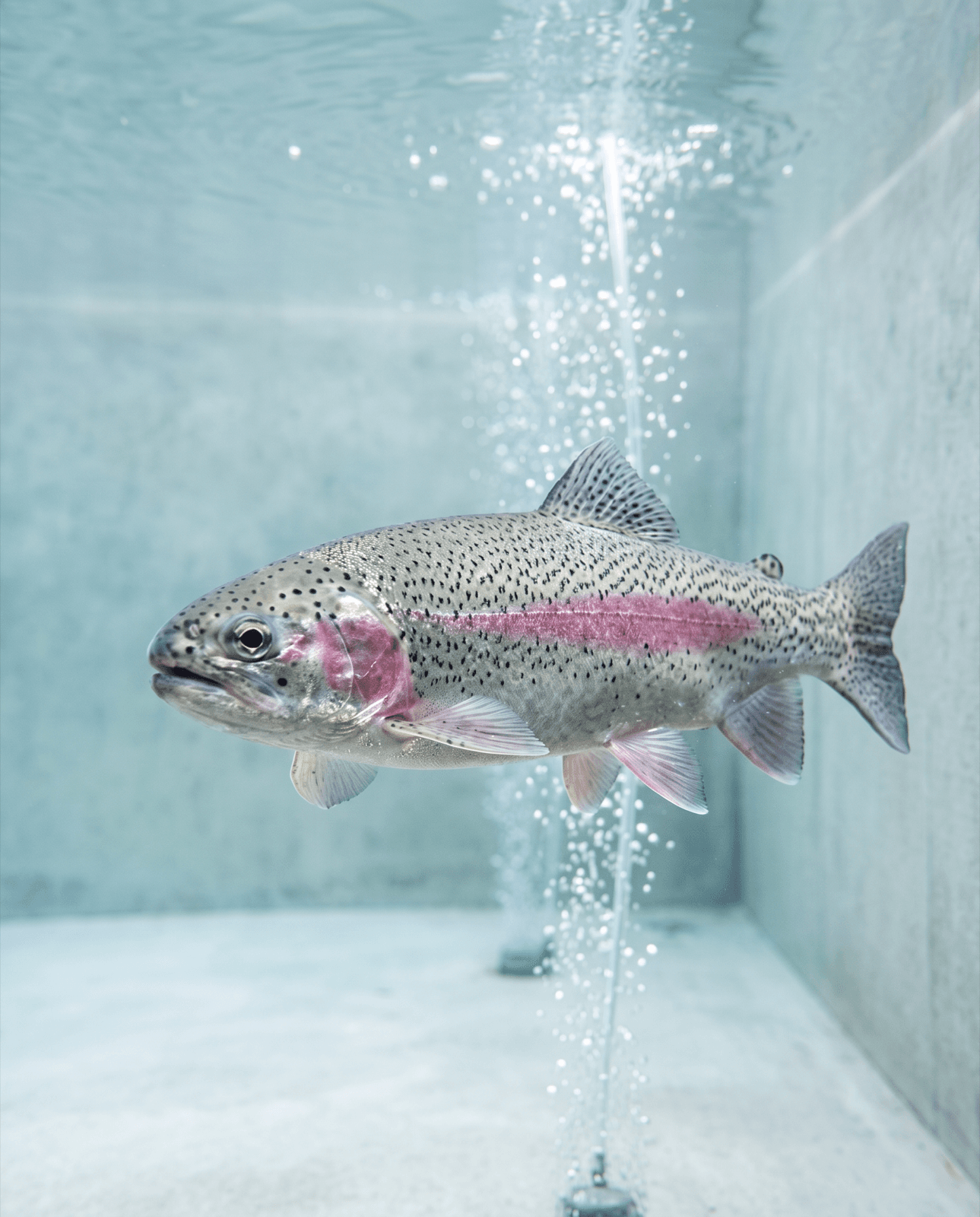
Our whole trout runs 2 to 3 kg and ships gutted or ungutted, in polystyrene boxes with ice. Fillet is hand-trimmed at about 800 g per unit, skin on or skin off, vacuum packed. Same fish, same pools, different point of departure.
Freight weight is not the same thing as product weight
Air freight is charged on what leaves the airport, not on what reaches the plate. Whole fish carries its head, frame and the ice around it; fillet carries neither the frame nor as much ice. If your landed cost per usable kilogram is the number that matters, calculate it on the form you are actually buying rather than on the price line.
Where the labour sits
Ordering whole means your team cuts. That is an advantage for a fishmonger with a counter and a cutting bench, and a liability for a distributor without one. Ordering fillet moves that labour to us and arrives ready to portion.
What the counter does with each
Whole fish on ice sells the freshness argument by itself — a clear eye and closed gills are things a customer can read without being told. Fillet sells convenience and travels better through a supermarket cold chain, because the vacuum pack protects it through handling that a whole fish on a tray does not survive as well.
A practical rule
Ask two questions before deciding:
- does the receiving end have people and space to cut fish
- is the product going to a service counter, or onto a shelf in a pack
- who carries the risk of the trim loss — you or the supplier
- and what the landed cost is per usable kilogram, not per shipped kilogram
Most buyers who work that through stop asking which is cheaper, because it turns out not to be the question.